
Blog

Established seedlings pricked out from seed trays to pots.

Glasshouse activity at Highdown Gardens

Highdown Gardens - LisaLisa, our Craft Gardener, talks about glasshouse activity at Highdown Gardens.

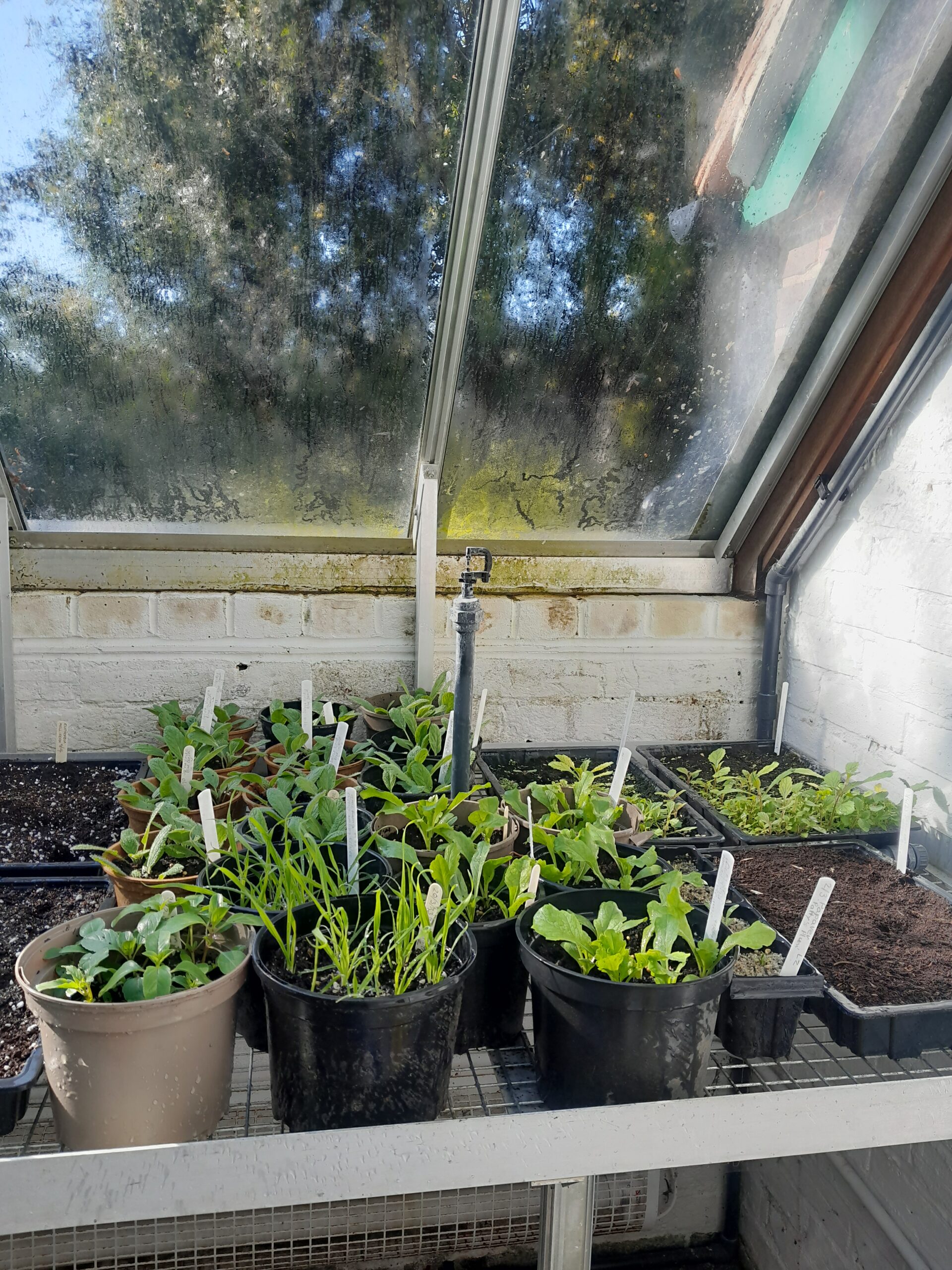
It’s been busy in the glasshouse at Highdown Gardens these past few months, there has been a lot of activity with sowing annuals, thinning out, pricking out seedlings, potting on, hardening off and planting out of young plants.

Beds in the Sensory Garden have been full of Daffodils which are now making way for Purple Sensation Alliums which will flower mid May. Two of the beds in particular are full of Alliums which will be beautiful end of May, however they will leave lots of bare areas when they die down.

This is why it’s important to start sowing seeds early in the year. Annuals were first sown in January and have been successionally sown every month since. Fragrant Sweetpeas, very tall and dark purple Scabious atropurpurea, bright orange Calendula, vivid blue Salvia viridian and various colours of different types of Cosmos and Nicotiana are just some of the seeds sown in our glasshouse.

Interesting named ‘Orange King’ and ‘Jelly Bean’ Californian poppies were directly sown in one of the raised beds in the Sensory Garden earlier this month, as they don’t like to have their roots disturbed.

When the Calendula seedlings were large enough they were planted directly out in the Sensory Garden, also in April. Calendula have readily self seeded in the garden in the past and survived, so it is hoped the rabbits won’t eat these young, delicate seedlings.

With trays of new seeds, growing seedlings and pricked out seedlings taking up lots of space in the glasshouse, we are trying to make space, so plants are planted out as soon as they are ready. Including plants which were overwintered in the glasshouse.

Pelargonium and Salvia cuttings which were taken early November last year are now lush and green. They were hardened off for a few weeks by placing them outside and bringing them back into the glasshouse at the end of the day, they were ready to plant out end of this month.

Dahlia tubers were dug up in the Autumn, dried and stored in the glasshouse over winter in crates loosely packed with shredded newspaper. In February the Dahlia tubers were planted in compost in pots and watered regularly in the glasshouse. It was very joyful to see the fresh green growth from the dry brown tubers. When there was plenty of green growth they were planted out in April, making more room in the glasshouse.

Rabbits are a big problem at Highdown Gardens but especially in the Sensory Garden, they enjoy eating new growth, young plants and the bark on young woody shrubs. This is why you’ll see chicken wire circling many plants around the garden. The small Cosmos plants recently planted out are protected by chicken wire, for example, otherwise they would be eaten by the rabbits. Other small plants planted out in April, Sweetpeas and Scabious atropurpurea, were mostly planted in raised beds, which we fortunately have in the Sensory Garden, so they will be left alone by the rabbits.

The future plan for the Sensory Garden is to determine plants and seedlings which will be left alone by rabbits and focus on propagating these. In the meantime we’re busy preparing annuals to fill beds and gaps ready for the summer.
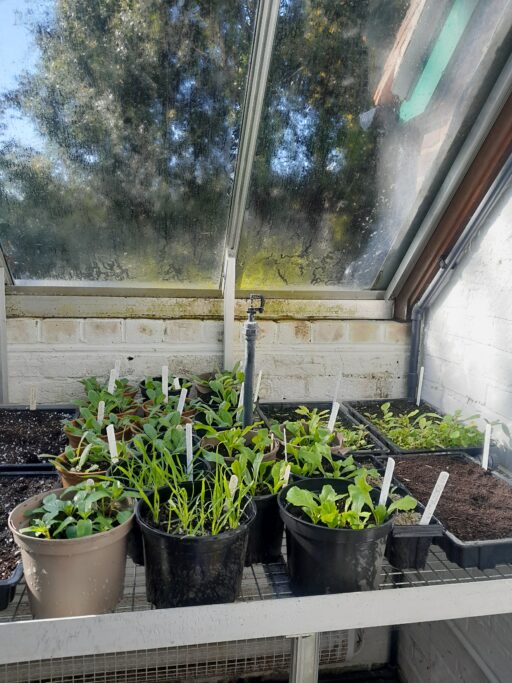
Established seedlings pricked out from seed trays to pots.
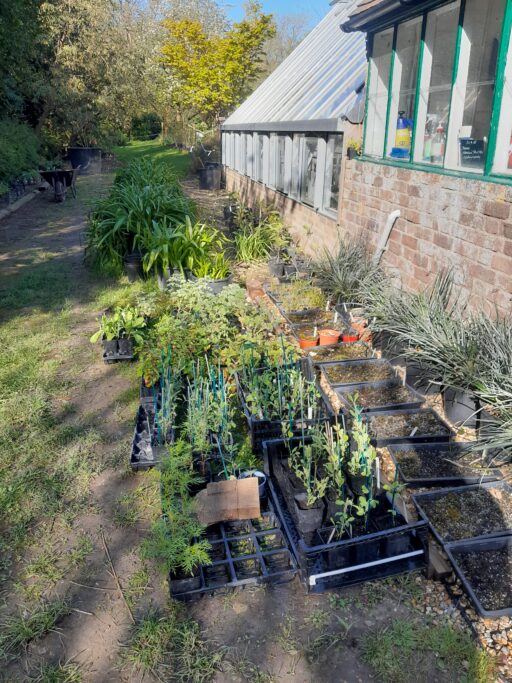
Established seedlings pricked out from seed trays to pots.

Hardening off young plants just outside the Glasshouse, before planting. Calendula, Cosmos, Sweetpeas, Salvia and Pelargoniums.
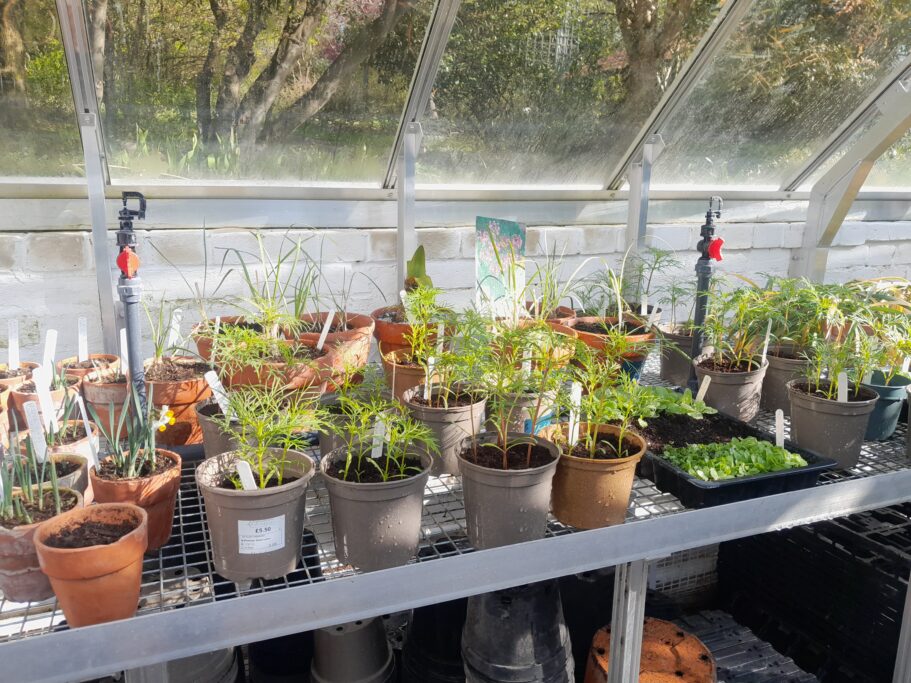
Hardening off young plants just outside the Glasshouse, before planting. Calendula, Cosmos, Sweetpeas, Salvia and Pelargoniums.

Different varieties of Cosmos seedlings pricked out into pots.
Different varieties of Cosmos seedlings pricked out into pots.

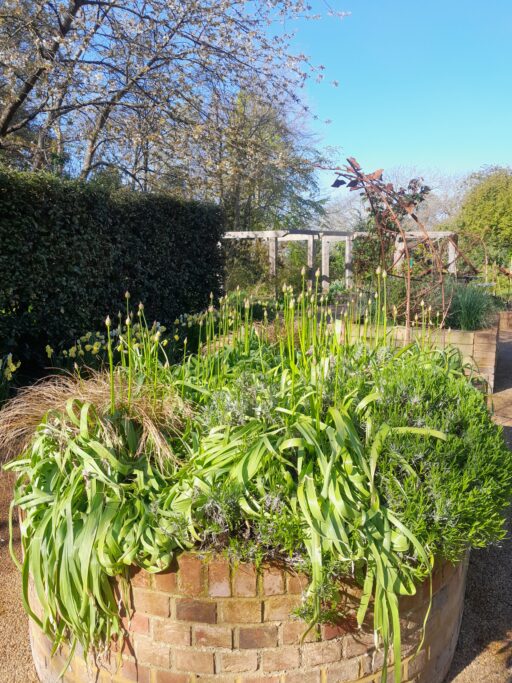
A raised bed in the Sensory Garden full of Purple Sensation Alliums ready to open.
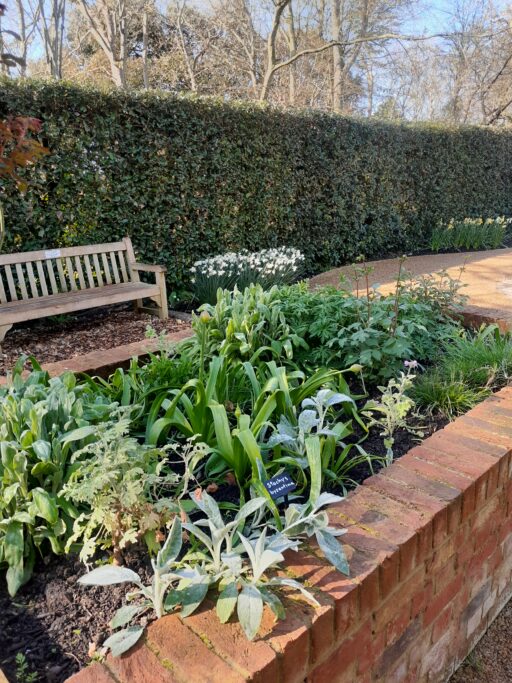
A raised bed in the Sensory Garden full of Purple Sensation Alliums ready to open.

Colourful Dahlias and scented Pelargoniums planted in one of the raised beds in the Sensory Garden.


Colourful Dahlias and scented Pelargoniums planted in one of the raised beds in the Sensory Garden.

 

HG banner (Stern) - Guided tours

Highdown Guided Tours (March to September)

Highdown Guided Tours

When: Last Thursday of every month (March to September)

Time: 2pm to 3pm

Price of tour: £5 per person (children under 12 go free)

Please arrive at Highdown Gardens Visitor Centre 5 minutes before the start time of your tour where your guide will greet you.

A unique chance to discover Highdown Gardens’ rich heritage, learn about the garden’s origins, its creators and VIP visitors, as well as spot the garden’s seasonal star plants.

These tours are delivered by Highdown staff and Tour Guide Volunteers.

All proceeds go back into Highdown Gardens Trust, focusing on preservation, education and recreation, providing a legacy for future generations.

There may be tickets available on the day, however we recommend pre-booking online to avoid disappointment.

Book tickets:

Book tickets for a Guided Tour

Highdown Gardens are free to enter as per usual.

See also:

HG banner (Stern) - Guided tours

Cyclamen repandum (credit Alex New)

Plant Focus: Cyclamen

For this month’s Plant Focus blog Dee, Highdown’s Volunteer Visitor Assistant, writes about the Highdown’s Cyclamen collection.

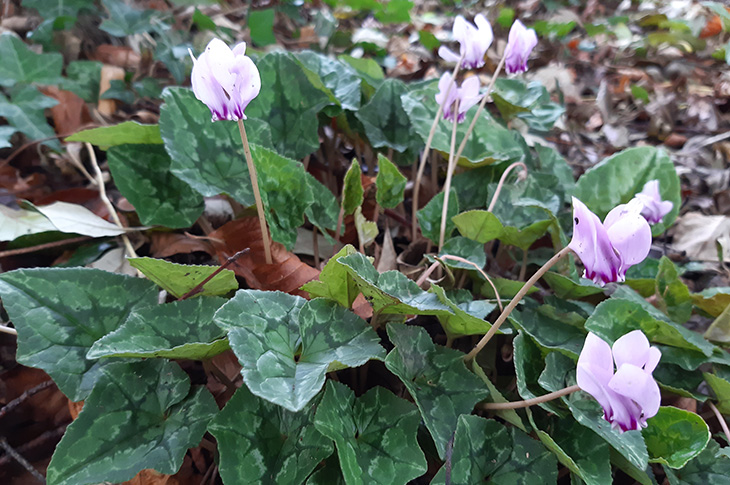
As a volunteer I am lucky enough to see the Gardens through every season, and even though the summer blooms have faded there is still much to see and admire in the garden. In my recent session, I was taken by the beautiful and delicate cyclamen that are now sprouting up, they seem almost otherworldly.

One rare species at Highdown is Cyclamen repandum, which came from a rugby-playing botanist Hiatt Cowles Baker, who found it in Corsica in the 1920s. They favour the edges of the woodland and can be seen in the lower rose garden and the middle garden. The Cyclamen repandum won’t be flowering until next Spring, however there are lots of varieties to see in the garden now including:

  • Cyclamen hederifolium
  • Cyclamen graecum
  • Cyclamen purpurascens
  • Cyclamen cilicium
  • Cyclamen coum

If you have the opportunity, do come and see the cyclamen for yourselves. The staff and volunteers will give you a warm welcome, and you can take the time to enjoy the beauty and serenity of the garden, now putting on its autumn cloak and preparing for winter.

Photo of Cyclamen repandum (credit: Alex New)

Cyclamen repandum (credit Alex New)

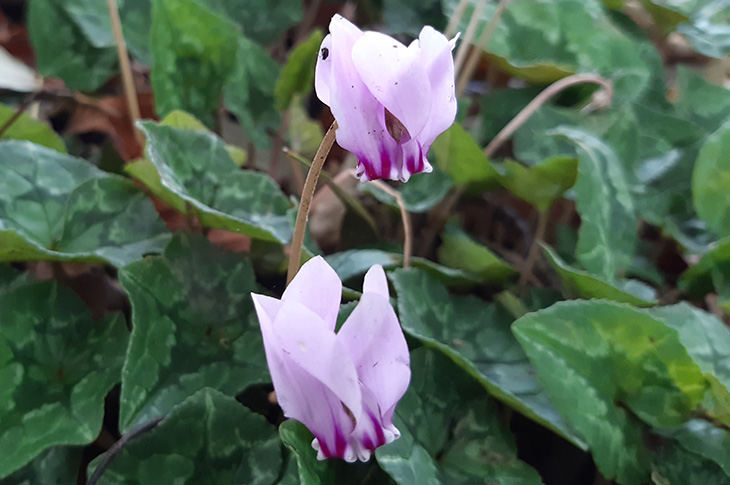
Photos of Cyclamen hederifolium and close up of the flowers (credit: Alex New)

Cyclamen hederifolium

Cyclamen hederifolium (flowers close up)

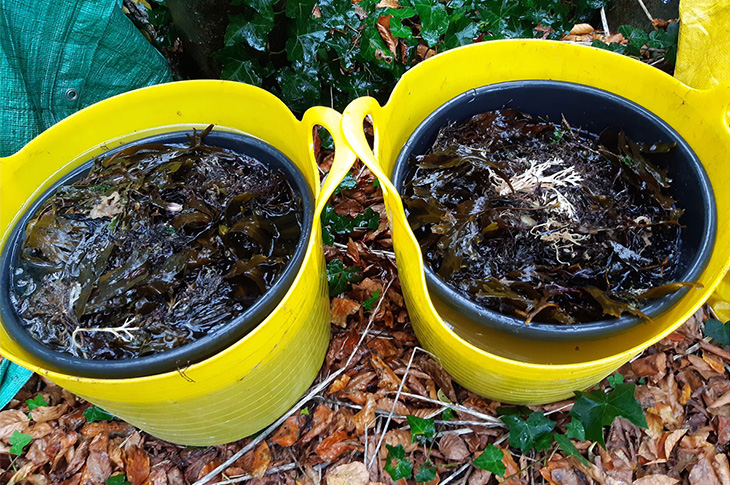
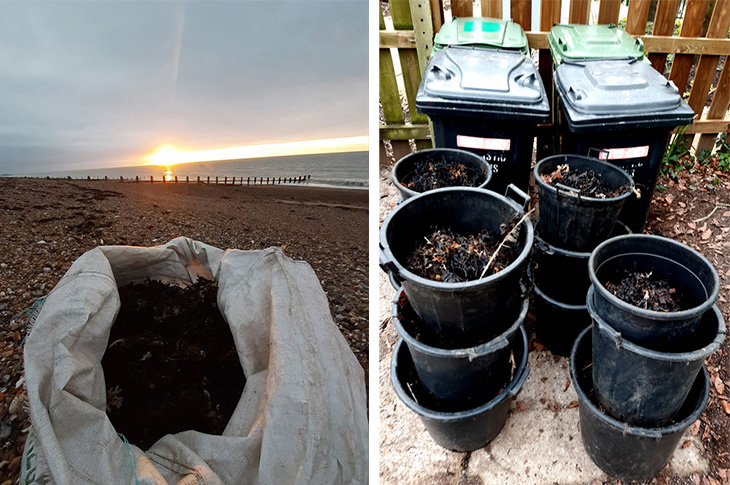
The seaweed soaking in the buckets

“Collected on the coast – Brewed on the hill” The making of Highdown Seaweed Tea

“Collected on the coast – Brewed on the hill”
The making of Highdown Seaweed Tea.

Have you seen the movie The Field, starring Richard Harris? It’s the story of a struggle over a field, transformed over generations from a rugged clifftop area into a fertile pasture abundant with crops, by improving the soil with seaweed hauled up from the beach below.

Hi, I’m Toby, a Craft Gardener up at Highdown, and I began my own exploration into the benefits of Seaweed Tea at the end of January this year.

After previously chatting with my colleague Rob, leader of the Foreshore team, and then completing the necessary Risk Assessments, I was clear to start gathering the dried seaweed on the high tide line of our shingle beach.

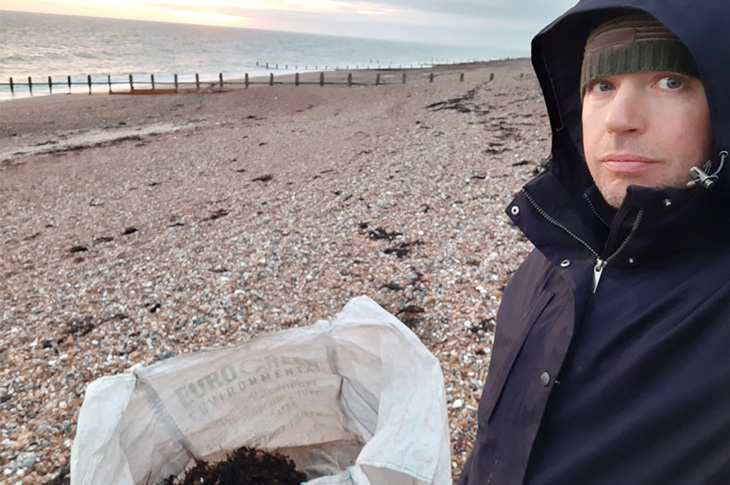
In about an hour I had filled two bulk bags half full (one full bag being too heavy to lift safely, thank you Risk Assessment) I loaded them into my car, then drove up the hill to work and to start brewing.

Collecting seaweed on the beach

Collected seaweed
I put the seaweed into 12 large old plastic plant pots and then into four household wheelie bins, I’d got from my colleagues in the Refuse Department. Then, with a hose, filled the bins halfway with water to cover the seaweed buckets. Then I had a cup of tea (not seaweed) and waited. Hoping for the magic to happen and have the brew ready for the new growing season starting in spring.

The seaweed soaking in the buckets

The benefits of Seaweed Tea are numerous, as Monty Don often extols on Gardeners World, so I’ve been very interested to discover more about this natural resource, we’re lucky to have on our doorstep.

Long before commercial fertiliser production, seaweed had been used to aid plant growth. Providing many benefits to plants way beyond the capabilities of artificial fertilisers.

It promotes stronger, healthier plants which are better able to cope with environmental stresses, including flooding, drought, salinity, pests and diseases.

No doubt, it’s a tool all gardeners should have up their sleeve.

After 12 weeks’ fermentation, as April drew to a close and May brought warmer weather, so the brew was ready. I removed the buckets and drained off the pale green liquid and smelt the strong healthy odour which gave a reassuring nose of goodness, then poured and stored it into an old water butt.

Once a week since, I’ve been diluting the tea, one-part seaweed to ten water, then feeding all the new plantings I’d introduced to the garden, including annuals, herbaceous perennials, woody shrubs and trees.

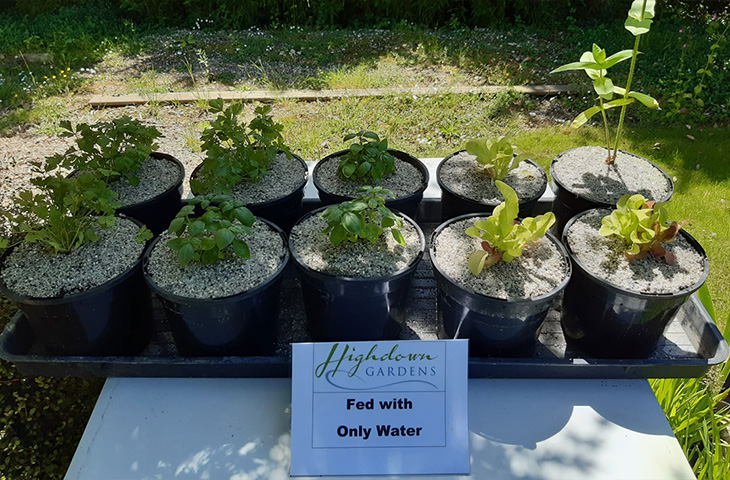
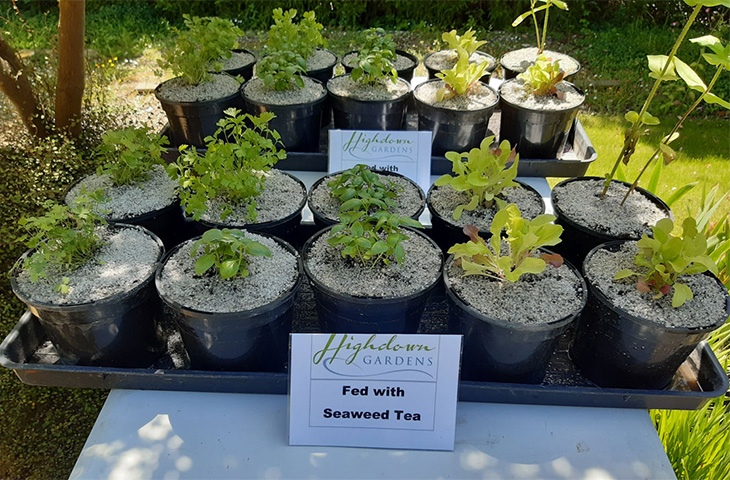
But how would I really know if the seaweed tea has increased their health and vigour? As I wondered what to do with the free seeds supplied with the Gardeners World magazine, the idea came to me. Sow the basil, parsley, lettuce and Zinnia seeds and when they’ve germinated pot them up into two identical groups, feeding one with the Seaweed Tea and a control sample fed only with water.

So, on 15th June 2022 the two samples look similar, but what will the results show in three months’ time? Hopefully, the proof will be in the brew…

Photo: Growing experiment – plants fed with only water

Growing experiment - plants fed with only water

Photo: Growing experiment – plants fed with seaweed tea

Growing experiment - plants fed with seaweed tea

Note from the Worthing Coastal Office: What Toby from Highdown Gardens is doing is very small scale and a pilot scheme for exploiting ways to potentially utilize and deal with any large seaweed deposits in the future. As it stands, so long as the seaweed is for personal use, floating and un-attached then it is ok to harvest.

Crown Estate webpage quote: Seaweed collection for personal use, in small qualities does not require a licence. However, we would recommend that anyone doing so takes account of the environmental sensitivities of collecting anything from the wild.

If you have any questions about seaweed collection please contact the Worthing Coastal Office coastal.office@adur-worthing.gov.uk

Rainbow-Shakespeare-back next year

Rainbow Shakespeare Theatre

Rainbow Shakespeare at Worthing’s Magical Highdown Gardens

Thank you to everyone who came along in July 2025 – we hope you had a great time.

We’ll be back again with other dates for next year … watch this page for details.


Rainbow Shakespeare Theatre logo (200px)July 2025: What could be more magical and essentially English, than watching an exciting, funny and understandable Shakespeare play in the open-air, whilst relaxing with a picnic and a drink.



Rainbow Shakespeare returns to Highdown Gardens to present two contrasting shows, understandable for all the family.

Picnic under the stars in one of the most beautiful places in Worthing and surrounds, and become part of what has become one of the great Sussex traditions: Rainbow Shakespeare! Bring the family and friends, make new friends in a unique setting. Sparkling professional actors along with some community performers will bring the plays alive in unforgettable productions of lively, spontaneous, ungimmicky Shakespeare that all ages can understand and enjoy.

2025 is Rainbow’s 25th Season, and once again they look forward to welcoming you to join in the celebration of live theatre-at its very best.

This year Rainbow presented one of the Bard’s most thrilling tragedies followed by one of his most popular romantic comedies:

  • Macbeth: Battles, witches, murder, ghosts and things that go bump in the night – all the ingredients that make a thrilling, theatrical experience are in this spine-chilling, spooky play about a scheming wife and her ambitious husband driven to murder their king. Understandable, edge-of-your-seat action for all the family.
  • Much Ado About Nothing: Perfect summer entertainment about two intertwined love stories: one, where the feisty Benedick and equally fiery Beatrice believe fervently, they can’t stand each other – but their friends have other ideas! The second, where the romantic Claudio and Hero woo and prepare to wed, only to have the match threatened by the villainous Don John…! Comedy and tragedy, coloured with songs and dances!

“Rainbow Shakespeare do a superb job of entertaining the audience!”
(The Argus, Brighton) ★★★★★


Times:

  • Evening performances: Gates open at 6pm
  • Matinee performances: Gates open at 12:30pm

Important Booking Information: Advance tickets through WTM are available to purchase up until 6pm the day before a performance. At the weekend, performances for Saturday and Sunday come off sale at 6pm the preceding Friday evening. On the day of a performance tickets may then be purchased (cash only) at the gate at Highdown Gardens from 90 minutes before each show (subject to availability).

Weather: The company will perform in light to moderate rain but if the weather is severe then a performance may have to be cancelled. For days when there is any doubt as to whether a performance will go ahead due to bad weather, all customers are advised to check for the most up to date information on the Rainbow Shakespeare Facebook page and/or Rainbow Shakespeare website. Or at 6pm customers should ring this number: 07973 984 175. If a performance is cancelled customers can either exchange tickets for another performance or get a refund.

Seating: Please bring camping/garden chairs or rugs to sit on (If you want to be at the front) as there is no seating up at Highdown Gardens.

Access: Theatrical events at Highdown Gardens take place on the lower lawns and access is via the south gates located from the road below the hotel. Audience members will be required to use the top car park and make their way down the hill on the road to the entrance, a distance of about 200m. Members of the public with mobility issues can be dropped off by the entrance at the south gate before the car continues onto the car park. Please be advised anyone in a wheelchair will need to have an able-bodied carer with them.


Photos: Orlando, Celia and Rosalind as Ganymede in As You Like It; Oliver Byng and Jake Snowden at Highdown; and audiences enjoying plays at Highdown (photos copyright Rainbow Shakespeare Theatre)

Orlando, Celia and Rosalind as Ganymede in As You Like It - and - Oliver Byng and Jake Snowden at Highdown (copyright Rainbow Theatre)

Highdown audiences enjoying Taming of the Shrew (copyright Rainbow Theatre)

Highdown audiences enjoying Julius Caesar (copyright Rainbow Theatre)

Rainbow-Shakespeare-back next year

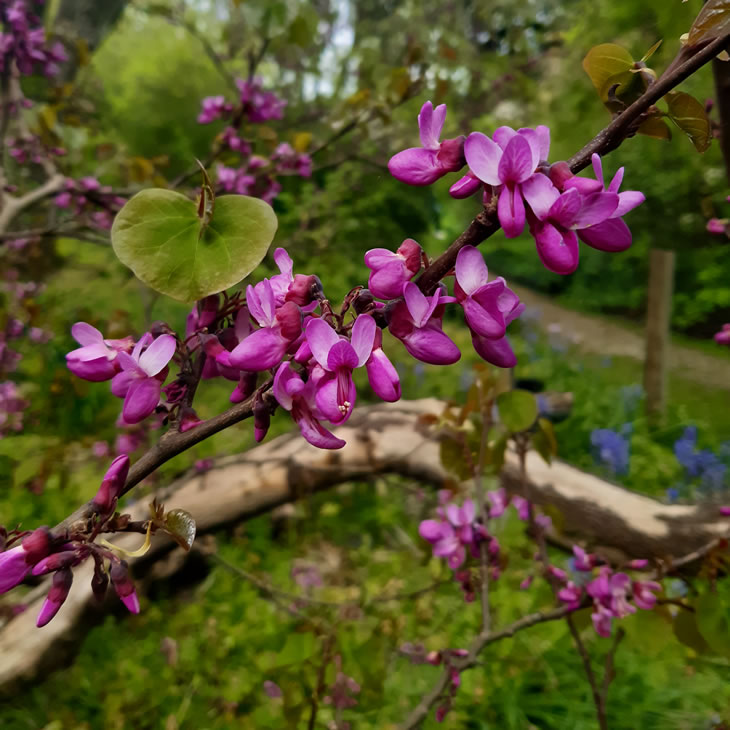
Judas Tree flowers up close (credit Ellen Mascard)

Plant Focus: Judas Tree – Cercis Siliquastrum

For this month’s Plant Focus blog Sue takes a look at the Judas Tree – Cercis Siliquastrum.

Common Name: Judas Tree
Latin Name: Cercis siliquastrum
Garden Location: Middle Garden
Country of origin: Southern Europe and Western Asia

Hello, my name is Sue and I’ve been volunteering at Highdown Gardens for about three years. I’m entrusted to do menial tasks in these beautiful gardens such as sweeping up leaves or weeding. Plus, I’m now training to be a guide hoping to share the fascinating story of the plants and people of Highdown.

The training has been fun, with Alex (the plant expert) and Ellen (in charge of volunteers) playing good cop, bad cop … one covering us in the compost of botanical facts in the hope that our horticultural knowledge will grow and thrive and the other drilling us endlessly on the facts that we have to have at the tips of our gardening gloves for when we do the tours. Yes Ellen, we can all now recognise the gorgeous Cyclamen repandum (see photo) and spot the champion tree Chinese hornbeam (Carpinus turczaninovii) at 50 paces.

Photo of cyclamen repandum (credit: Alex New)

Cyclamen repandum (credit Alex New)

But there is one specimen that has caught my attention and to which I keep returning – the Judas tree (Cercis siliquastrum). What is it about this tree that I find so alluring? I think it is partly the name. It is said to be named after that most despised of Biblical characters, Judas Iscariot, one of the 12 disciples and who betrayed Jesus with a kiss, leading to his arrest and crucifixion. He is said to have hung himself from the branches of this beautiful and quirky tree. More likely, but less memorable, is that it is named after Judea, now called Israel where it can be found.

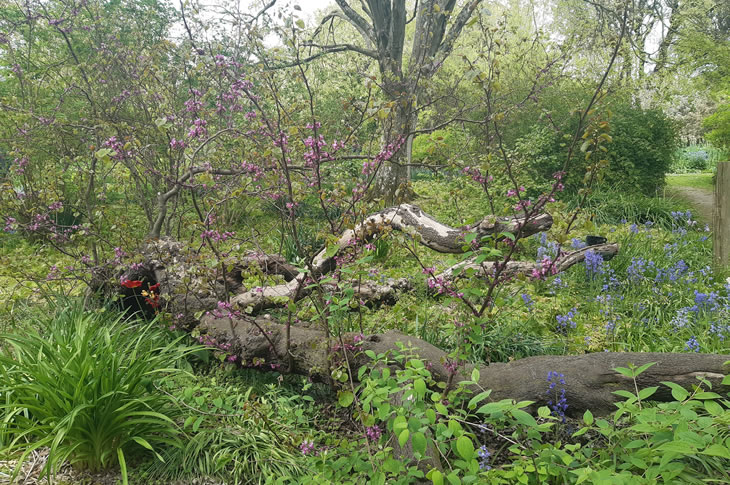
It’s unusual but not rare and a friend recalls seeing it often in Turkey, where she lived for many years. Here at Highdown, there are three or four Judas trees and in late April this year, they were at different stages of flowering depending on their position. Let’s talk about the flowers because that is the other fascinating thing about Judas – the flowers often grow directly onto old bark. Just pause to take that in because that really struck me as being unusual! Often, before the leaves develop, these little dark pink buds pop up straight onto the bark. If you know of any other trees where this happens, please let me know! They have a complex dark pink, pea-like flower and although I’ve not seen it yet, bear a pod-like fruit later in the year. One of the trees in the Middle Garden was absolutely covered in flowers, like a damask tablecloth.

Photo of Judas Tree flowers growing directly off of bark (credit: Ellen Mascard)

Judas Tree flowers growing directly off of bark (credit Ellen Mascard)

Photo of Judas Tree flowers up close (credit: Ellen Mascard)

Judas Tree flowers up close (credit Ellen Mascard)

Sir Frederick Stern recorded in his book, A Chalk Garden, that one of Highdown’s Judas trees came from Afghanistan and was given to him by the son of a fellow military man, Major Arthur Algernon Dorrien-Smith, who grew them from seed. There’s a whole other story to be told about this man, and his descendants who were Lords of the Isles of Scilly and created the world famous Tresco Gardens. Maybe another day!

One last amazing fact about the Judas Tree is that it likes to lie down as it gets older – becoming more and more prostrate so that many people think it has actually died. Now that is something I can really identify with!

Photo of Judas Tree lying down (credit: Ellen Mascard)

Judas Tree lying down (credit Ellen Mascard)

Salvias

Tales from the potting shed

Highdown Gardens - Peter Keefe, Senior GardenerHello my name is Pete, I am the senior gardener at Highdown Gardens.
This month I wanted to share with you some of the regular propagation work which takes place in the garden.

Highdown Gardens has lots of different plants in its collection. Some are important mature examples or rare species, and these are being catalogued and propagated by our Plant Heritage Officer.

Many of the plants in the garden are more modest in their historical or botanical importance but still contribute to the interest and look of the garden.

Plants like these do not live forever. Some have very short lives naturally and others can find our climate challenging.

In order to ensure the continued presence of these plants in the garden different methods of propagation can be used.

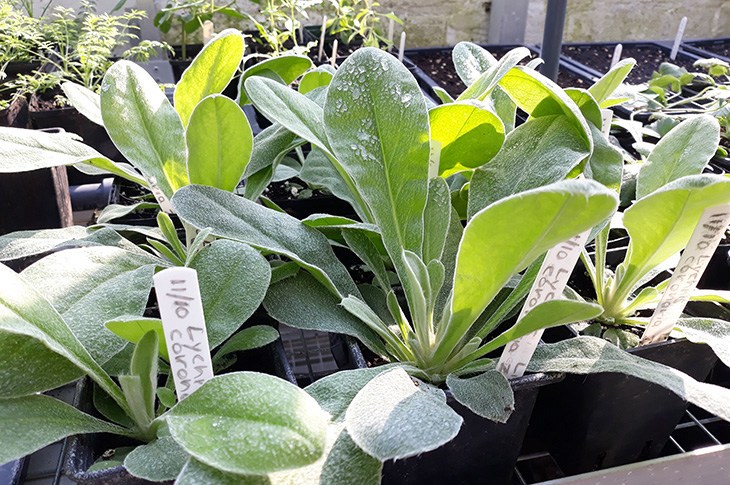
Last year during the late summer and autumn, the gardeners were saving seeds from plants such as Tithonia ‘Torch’ and Lychnis Coronaria.

Lychnis coronaria

The Tithonia cannot survive our winter and only likes to live outside when there is no frost. It is usually fine in the South of England between May and October.

The seed has recently been sown in trays filled with seed compost and placed in our heated glass house. This should give us strong, young plants which can be planted out in the garden in May or June.

The Lychnis is a short-lived perennial that can survive our winters, so we have taken a different approach.

The seed was collected and sown in the autumn in our heated glass house. This has produced some lovely little garden ready plants which will only need acclimatising to the cold in our cold frames. They will be planted out later in the spring.

We also have a few lovely shrubby Salvias in our sensory garden. These can suffer if we have a bad winter so it is wise to take a few cuttings every year.

Salvias

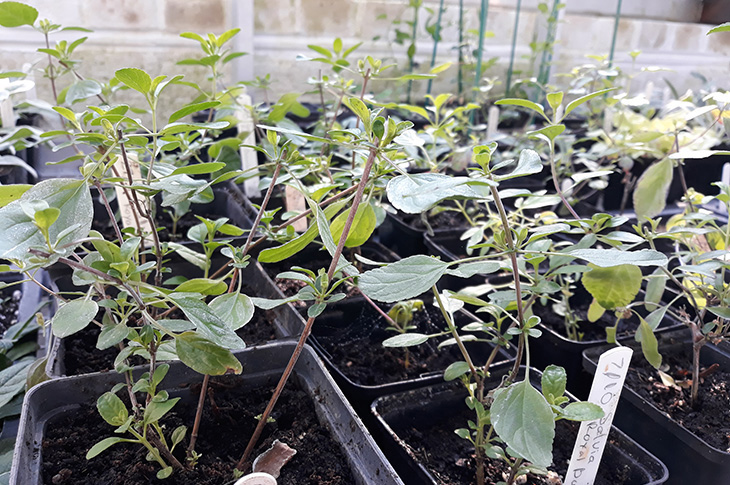
Last September and October we took several cuttings from healthy, typical non-flowering stems, putting four to six in a 9cm pot filled with compost and perlite, a mineral which keeps the soil loose and well-drained, and placed them in our new heated glass house.

Earlier this month we separated all the cuttings and potted them up individually. These will make garden ready replacements for any we have lost over the winter, or give us plants to use in other areas of the garden.

This type of propagation is enjoyable and cost-effective, and there is something incredibly satisfying about watching a seed you have planted, or a cutting you have taken, grow.

Great spotted woodpecker (Pixabay - 6552939)

A wild year at Highdown

Highdown Gardens - CharlotteHi, I’m Charlotte and I’ve worked at Highdown Gardens for a couple of years now.

One of the most enjoyable parts of working here is the wildlife I’ve seen during this time! Every day I’ll have a robin or two following me as I work, spotting grubs in the disturbed ground.

Early last year we were closed to the public due to renovation work which gave the plants and animals some breathing space.

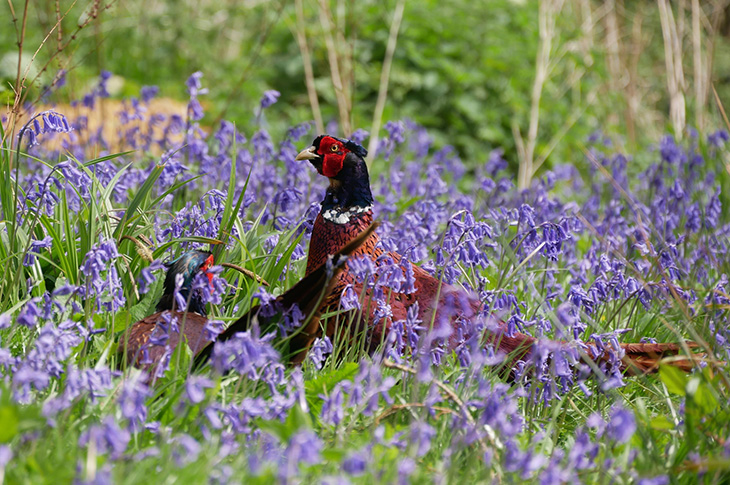
There were pheasants running all over the garden in packs of five or six, I’d not seen so many together before! Interestingly, the collective noun for pheasants is a bouquet , a covey or a nide. They can be troublesome in gardens, scraping the ground and digging up plants to find food. At Highdown they tucked into a large number of our newly planted crocus bulbs, what a feast!

Pheasant (Pexels - nestor-montagu - 6572914)

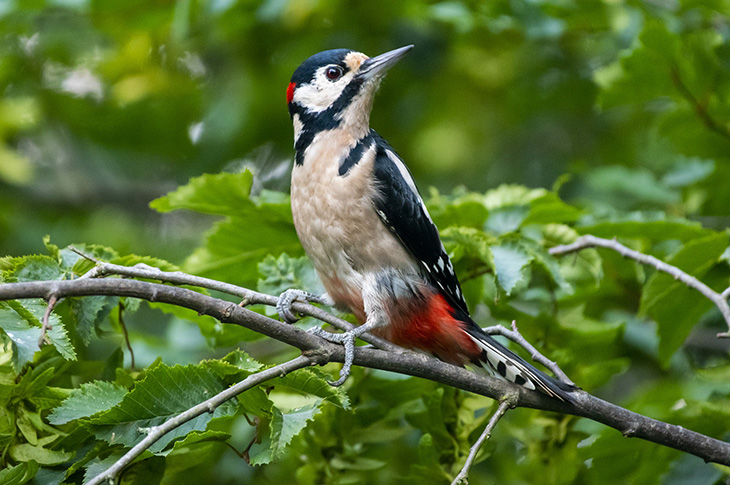
Woodpeckers can often be heard hammering away and even seen far up in the trees. Last year a hole appeared in the Acer davidii near the visitor centre, about five foot up the trunk. This was quite puzzling until we saw a woodpecker pair coming and going. Not wanting to scare them away, we gave them plenty of space and were soon rewarded with hearing the chicks chirping away! The hole to the empty nest remains so see if you can find it on your next visit.

Great spotted woodpecker (Pixabay - 6552939)

Not just birds, we’ve got mammals too. One morning I came into sight of a fox and three cubs playing in the sensory garden. This garden’s an ideal place for them as there are plenty of rabbits about. Obviously rabbits are a gardener’s nightmare, which is why you’ll see certain plants surrounded by a low chicken-wire barrier to deter rabbits from eating them. Despite this I love to see their little cute tails hopping about.

Fox (Pixabay - 5042210)

One time I was weeding through the borders and noticed a tiny hole next to me and saw rustling in the leaves nearby. A minute later a little furry blur ran out and then, changing his mind when he saw me, quickly retreated back into the foliage. I kept really still and the creature tried a few more times, each time coming a little bit closer to me and I saw it was a vole. Eventually he got the courage to and ran out all the way and scampered straight down the hole next to my boot.

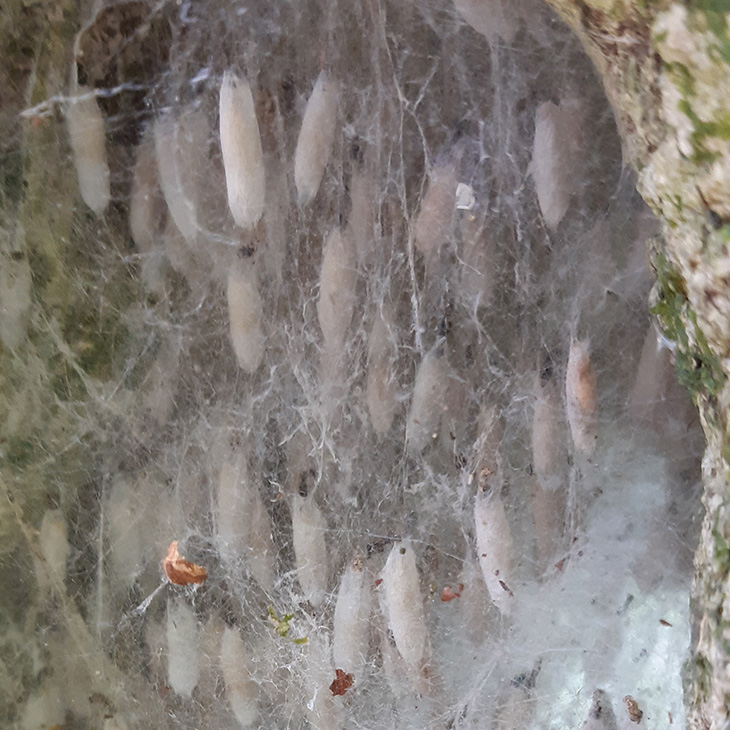
We have smaller critters of note in the garden. Everyone is curious about the Euonymus grandiflorus in spring time when it gets completely covered in the web of the spindle moth caterpillars, from which caterpillars hang dangling in the air from long threads. The photo below shows them pupating in webs near the trunk before they become tiny white moths with black dots.

The web of the spindle moth caterpillars

One thing I’d never seen before coming to Highdown are stag beetles, of which I’ve now seen a couple over the summer. They like living in leaf litter, dead wood and shady spaces. I think the picture may be a lesser stag beetle as it doesn’t have the large jaws.

Lesser stag beetle

Why not come, look and listen for wildlife at Highdown? Just remember to be respectful of creatures in their habitat, not disturbing just quietly observing.